
When you’re moving into an apartment or condo in San Antonio or Austin, you can’t treat it like a simple house move. Stairs, long carries, and tight hallways slow every trip, and shared elevators often require reservations, deposits, or proof of insurance. If you don’t know your building’s move-in hours, parking rules, and paperwork, you’ll lose time fast—and the clock won’t stop. Here’s what you need to confirm before move day (and if you want a simple overview of all options, start with what we offer).
Key Takeaways
- Apartment and condo moves in San Antonio and Austin often take longer due to access control, elevators, and parking limits.
- Ask your building about elevator reservations, padding requirements, and exact move-in/move-out hours before move day.
- Confirm loading zone rules, truck size limits (26 feet), and local parking restrictions to avoid towing and long carry delays.
- Share details on stairs, elevator size, and carry distance so movers can plan labor, equipment, and timing accurately.
- Ensure you have the necessary gate codes, deposits, and insurance, and safeguard common areas to avoid any turnaways, complaints, and costly delays.
Quick Answer: Why Apartment Moves Take Longer
As apartments and condos add layers of access control, your move usually takes longer than a house move: you may need to reserve an elevator, use a specific loading zone, park farther away, navigate stairs or long hallways, and work within building move-hour rules and gate codes—all of which slows the crew’s trips, increases labor time, and can raise the total cost (especially compared with a standard local move).
In San Antonio and Austin, those trip delays stack up fast: fewer items per run mean more door-to-truck cycles, more breaks in momentum, and tighter timing windows.
Elevator logistics can bottleneck everything, especially if other residents share it. Long carries and stairs increase fatigue and handling time, so crews must pace for safety and care.
Elevator schedules can bottleneck your move, and long carries or stairs add fatigue—so crews slow down for safe, careful handling.
For an accurate estimate, share floor, elevator access, carry distance, parking limits, and entry codes (this ties directly into how local pricing works—see our guide on local moving costs in San Antonio & Austin).
What to Ask Your Building Before Move Day
Before move day, call your leasing office or HOA and confirm whether you must reserve the elevator and use padding, and what time windows they allow for moves.
Ask for the exact move-in/move-out hours so you don’t lose time waiting or get turned away.
Ultimately, verify where the truck can park, whether there’s a loading zone, and how far the carry is from the curb to your door.
Elevator reservations and padding rules
Even though you’ve booked movers, your building can still slow the day down if the elevator isn’t reserved or protected.
Ask management about elevator booking: do you need a written reservation, a refundable deposit, or proof of insurance? Confirm which elevator you’re allowed to use and whether a key fob is required, so your crew isn’t stuck waiting in the lobby.
Next, clarify the padding rules. Some condos require staff-installed pads, while others expect you to bring blankets and corner guards.
Ask where pads are stored, who unlocks them, and how early they can be put up. Additionally, confirm if door wedges are allowed and whether floor protection is required.
Sharing these details helps your movers plan calmly, work safely, and serve your neighbors with care.
Move-in and move-out hours
When can your building actually allow a move? Ask for the exact move window by day, including weekends, holidays, and quiet hours.
Many San Antonio and Austin communities limit starts to mid-morning and require you to finish by a set time, which can stretch your labor and increase cost if you need a second day.
Confirm whether after-hours elevator use is banned and whether management needs advance notice to unlock doors or disable alarms.
Request the written move-in policies and move-out procedures, plus any fee, deposit, or paperwork deadline tied to those hours.
Share the approved window with your movers so they can plan crew size, arrival time, and contingency time without rushing your neighbors or staff.
Parking and loading zones
If your truck can’t park close to the entry, the move slows down fast, and your labor cost usually rises.
Before move day, ask management where the loading zone is, how long you can use it, and whether cones, permits, or hazard lights are required under local loading regulations. Confirm if the space fits a 26-foot truck and if you must schedule a dock time.
Next, clarify parking limitations: guest spots, garages with low clearance, street parking rules, and towing policies.
Ask if you can stage dollies near the door or if sidewalks must stay open. Get a map, gate code, and the exact route your crew should take.
When you share these details, you help your movers plan efficiently and protect neighbors’ access.
Stairs, Elevators, and Long Carries (What They Change)
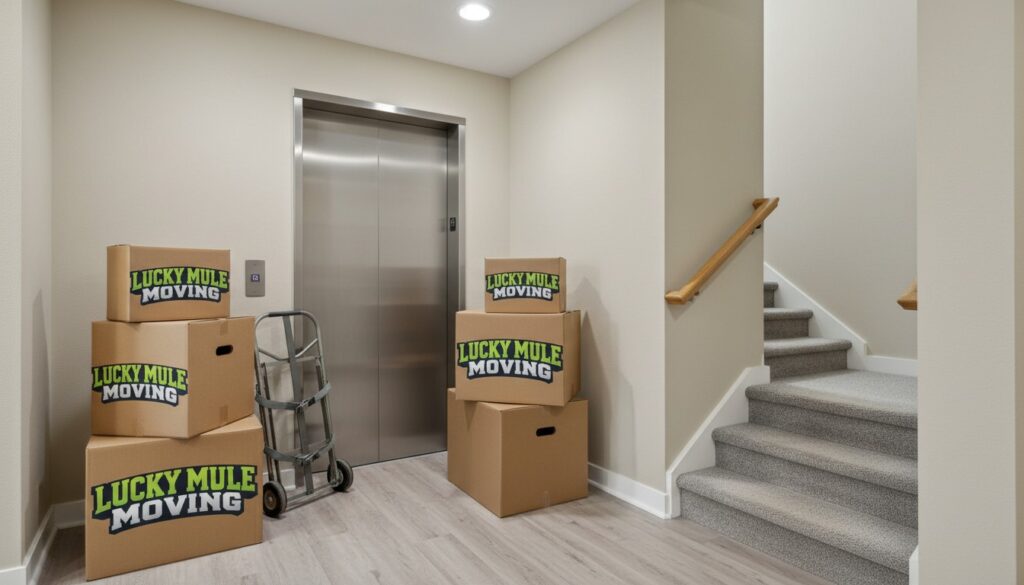
Even a small apartment move can take much longer in San Antonio or Austin once stairs, elevators, or a long carry are involved.
Stair navigation slows pace, adds safety checks, and may require extra hands for bulky items. Elevator access can help, but only if you’ve reserved it, secured a fob, and allowed for waits and shared use.
Stairs slow the pace and add safety steps; elevators help only with reservations, fobs, and wait-time buffers.
Long carries—from a distant garage, courtyard, or gated walkway—turn every box into extra minutes and extra trips.
To serve your crew well and get a fair estimate, share your floor number, number of flights, elevator size, reservation rules, carry distance, gate codes, and any move-hour limits.
These details shape labor time, truck time, and total cost.
What to Pack First for an Apartment Move

How do you make an apartment move in San Antonio or Austin feel less chaotic?
Start by packing what reduces day-of decisions and helps your movers serve you efficiently. Use Room Prioritization so boxes land in the right place, even though elevators run slowly or stairs add trips.
Begin with packing necessities you’ll need immediately, then work outward by function, not by room size. Label clearly and keep a “carry-on” tote separate for gate codes, lease papers, meds, chargers, and water.
- Open-first box: bedding, towels, soap, basic tools, trash bags.
- Daily-life kit: 2–3 days of clothes, dishes, coffee/tea, and pet supplies.
- High-impact rooms: kitchen and closets first; décor and books last.
How to Protect Floors, Walls, and Doorways
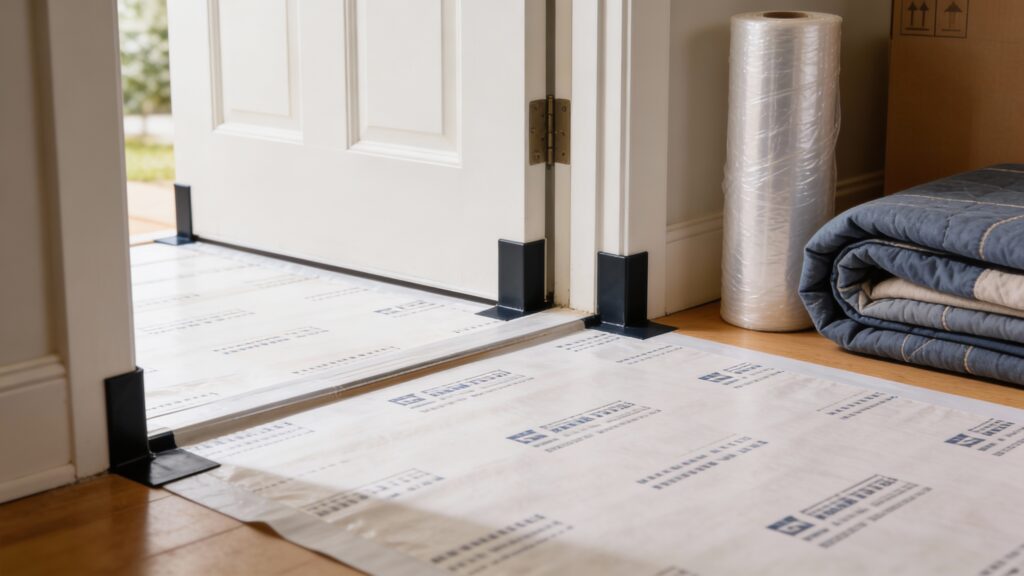
Since apartment hallways, elevators, and tight condo entries in San Antonio and Austin take the most abuse on move day, you’ll save time and potential charges by protecting floors, walls, and doorways before the initial box comes out.
Start with floor protection: taped-down runners, clean moving blankets, or Ram Board from your unit to the truck path. Add non-slip mats at turns and elevator thresholds.
Prioritize floor protection with taped runners, clean blankets, or ram board—plus non-slip mats at turns and elevator thresholds.
Next, set doorway guards or wrap jambs with blankets and stretch wrap so you don’t chip paint when you angle heavy furniture through.
Use wall padding on corners, handrails, and elevator interiors—especially near call buttons and mirrors.
Keep a spotter at every tight turn to guide, hold doors, and serve your neighbors by keeping common areas clean, quiet, and safe during the move.
Common Mistakes That Cause Delays
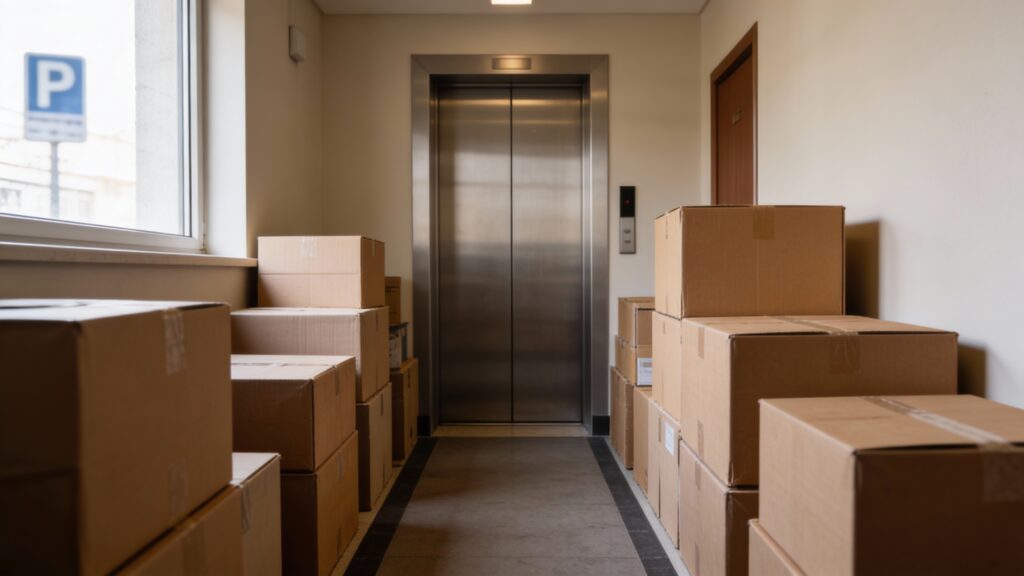
Protecting floors and doorways prevents damage, but avoidable scheduling and access mistakes still create the biggest slowdowns in San Antonio and Austin apartment and condo moves.
You serve everyone’s time best when you plan access like it’s part of the move, not an afterthought.
- You don’t reserve the elevator or confirm move hours, so you wait on other residents, security, or a locked service bay.
- You assume curb space exists, but loading zones are full, parking is far away, or towing rules require long carries and extra trips.
- You arrive without gate codes, fob access, or stairwell permissions, so your team has to reset, re-park, and lose momentum.
These common pitfalls add labor hours and overtime.
Plan ahead to avoid delays and keep costs predictable (and if your move includes multiple stops or office-style logistics, use our office moving checklist to keep roles and timing clean).
What to Share for a Fast Written Estimate

Have you ever wondered why two condo moves with the same amount of belongings can have such disparate pricing?
To receive a fast written estimate in San Antonio or Austin, provide the details that affect the time required for your move. Please provide your complete moving inventory by room, along with photos or a brief video walkthrough, to help your crew plan effectively and ensure the building’s protection.
Include: exact addresses, unit numbers, floor level, stairs count, elevator size, and whether you must book an elevator window.
Note loading zone rules, parking distance, long carries, and gate codes. Please inform them about move-hour restrictions, COI requirements, and any tight turns or narrow hallways.
List special items (piano, safe, large TV, heavy mirrors) and any disassembly needs. Ultimately, note your preferred dates and whether you want packing or storage as well (if you’re adding fragile-only packing or full packing help, see which packing option fits your move).
Frequently Asked Questions
Do Movers Handle COI Paperwork Required by My Apartment or Condo?
Yes—most movers can handle it; no need to wrestle that red tape alone. You’ll share the COI requirements, and they’ll manage the paperwork. Send your building’s form, limits, and deadlines early.
Can You Move Items Through Balconies or Windows if Hallways Are Tight?
Yes—you can sometimes move items via balcony access or windows when hallways are tight, but you must prioritize window safety and get building approval. You’ll share item sizes, floor height, obstacles, and access details.
What Happens if My Move Runs Past the Building’s Allowed Move Hours?
If you run past move hours, you’ll likely stop, secure items, and face late fees. You’ll call management, confirm rescheduling options, and reset crews. You can help others by sharing rules, codes, and access.
Do You Disassemble and Reassemble Beds, Desks, and Large Furniture?
Yes—you can request furniture assembly: we’ll disassemble and reassemble beds, desks, and large pieces when needed. For a smooth move, you’ll tell us which items are modular, provide the hardware, and flag tight spaces early.
Can You Store My Belongings Overnight if Keys or Elevators Aren’t Available?
Yes—you can store your belongings overnight when keys or elevators aren’t available. You’ll protect your schedule, you’ll serve others’ time, and you’ll keep things secure. Ask about overnight storage rates, access windows, and temporary solutions.
Conclusion
Apartment and condo moves in San Antonio and Austin go faster when you plan for stairs, reserve elevators, and follow building rules. Confirm move-in hours, parking, and paperwork early, then pack the essentials first and protect floors, walls, and doorways. Avoid last-minute surprises that stall the truck and waste your time. Want your move to feel simple, not stressful? Share your building details up front and book online to get a fast, accurate written estimate.